Do you ever check your bank account and wonder where all your money went?
You paid your bills. You bought groceries. You didn’t make any particularly expensive purchases. Yet somehow, there is almost nothing left to save.
Maybe it’s the frequent online orders, daily convenience purchases, spontaneous shopping trips, or the habit of buying something simply because you feel like it.
If this sounds familiar, learning how to stop spending money can help you regain control of your finances.
Of course, the goal is not to stop spending altogether. You still need to pay your bills, buy groceries, take care of yourself, and enjoy your life.
The real goal is to stop unnecessary spending that happens automatically, without intention, and often without much satisfaction.
Here are 12 practical ways to change your spending habits and start keeping more of the money you earn.
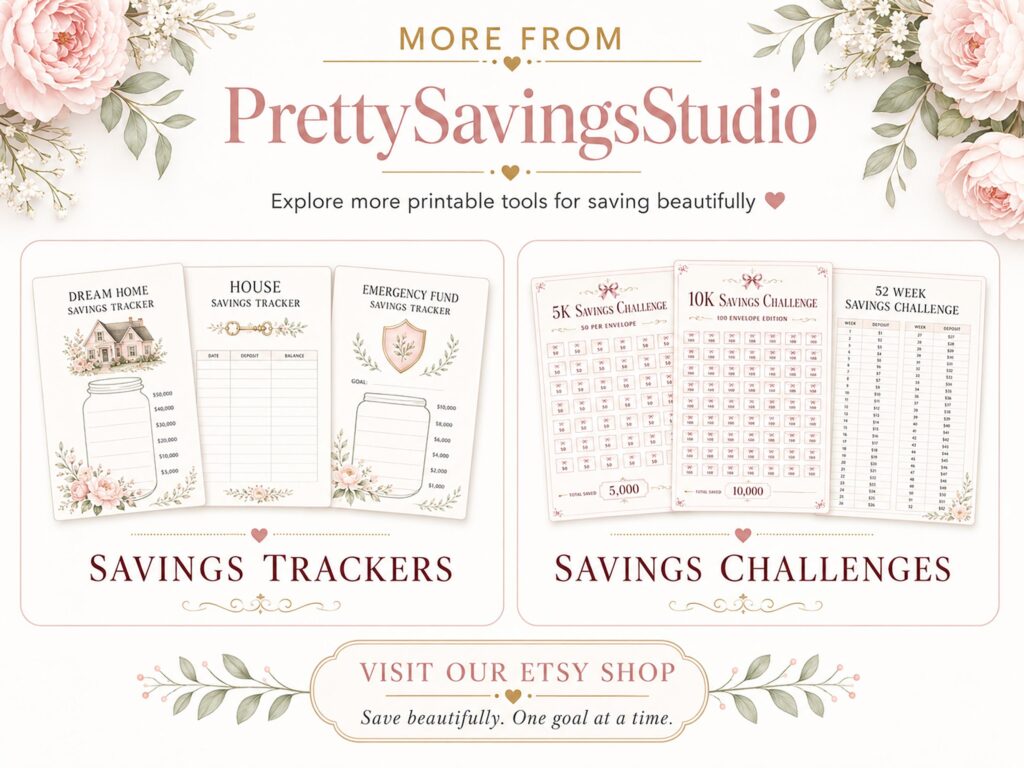
Pretty Savings Studio
Pretty tools for your more beautiful and organized life:
1. Find Out Where Your Money Is Actually Going
Before trying to change your spending habits, look at what is currently happening.
Open your banking app and review your transactions from the last 30 days.
Pay special attention to spending that was not essential.
For example:
- Online shopping
- Takeout and food delivery
- Coffee and snacks
- Convenience store purchases
- Clothing and accessories
- Entertainment
- Small digital purchases
- Unplanned household items
Add up the amounts in each category.
You may discover something surprising.
For example:
| Spending Category | Monthly Total |
|---|---|
| Online shopping | $180 |
| Takeout and delivery | $120 |
| Coffee and snacks | $75 |
| Random purchases | $85 |
| Total | $460 |
That is $460 spent on discretionary purchases in one month.
You do not necessarily need to eliminate all of it. However, knowing the actual amount gives you a starting point for making changes.
The first rule of spending less is knowing what you are spending now.
2. Identify Your Personal Spending Triggers
People do not always spend money because they need something.
Sometimes spending becomes a response to an emotion, situation, or habit.
For example, you might shop when you are:
- Bored
- Tired
- Stressed
- Celebrating something
- Looking for a little excitement
- Scrolling through social media
- Trying to reward yourself after a difficult day
Think about the last five unnecessary purchases you made.
What were you doing immediately before buying them?
Were you actively searching for something you needed, or did the desire to shop appear along the way?
Try identifying your three most common spending triggers.
Once you recognize the situations that lead to unnecessary spending, you can begin changing the routine surrounding them.
3. Stop Shopping as a Form of Entertainment
Shopping can easily become a recreational activity.
You browse online stores when you’re bored. You visit a shopping mall because you have nothing planned. You open shopping apps while drinking your morning coffee.
Even if you don’t intend to buy anything, you continuously expose yourself to new products.
Try replacing recreational shopping with activities that do not revolve around purchasing something.
For example:
Instead of browsing online stores, read a book.
Instead of visiting the mall out of boredom, go for a walk.
Instead of checking new arrivals, watch a movie you already have access to.
You don’t have to avoid shopping completely.
Simply stop using it as your default activity when you have free time.
4. Make Spending Slightly Less Convenient
If you can purchase something in three seconds, there is very little time between wanting an item and spending money on it.
Create a few small obstacles.
For example:
- Remove saved payment details from shopping websites.
- Delete shopping apps you use unnecessarily.
- Turn off promotional notifications.
- Unsubscribe from retail newsletters.
- Disable one-click purchasing where possible.
- Stop following accounts that constantly encourage you to buy products.
You are not banning yourself from buying anything.
You are making unnecessary purchases a deliberate decision rather than an automatic reaction.
5. Give Yourself a Weekly Spending Allowance
One practical way to control discretionary spending is to decide in advance how much you can comfortably use.
For example:
Weekly personal spending allowance: $75
This amount can cover optional purchases such as coffee, entertainment, treats, or small shopping expenses.
Once you have spent the $75, you wait until the next week before making additional nonessential purchases.
The exact amount depends on your income and essential expenses.
A weekly allowance can feel easier to manage than trying to control an entire month at once.
It also gives you permission to enjoy some spending without constantly questioning every purchase.
6. Stop Treating Every Available Dollar as Spending Money
One reason people struggle to save is that they treat their entire remaining bank balance as money available for purchases.
For example:
You receive your paycheck.
You pay the bills.
Your account shows:
$700 remaining.
It is tempting to think:
Great! I have $700 to spend.
But what if you divide the money first?
Emergency savings: $150
Vacation savings: $100
Upcoming expenses: $150
Flexible spending: $300
Now you know that only $300 is intended for discretionary purchases.
The other $400 already has a purpose.
A printable savings planner or savings goal tracker can help you keep those purposes visible.
7. Create Rules That Eliminate Repeated Spending Decisions
Constantly deciding whether you should or shouldn’t buy something can become exhausting.
Simple personal spending rules make everyday choices easier.
For example:
Rule 1: No recreational shopping on weekdays.
Rule 2: No purchases from promotional emails.
Rule 3: All nonessential online purchases go onto a wishlist first.
Rule 4: No new clothing purchases until I review what I already own.
Rule 5: I check my available spending money before shopping.
You don’t need 20 strict rules.
Choose two or three that address your most expensive spending habits.
Clear boundaries can be more effective than repeatedly telling yourself, I really need to spend less.
8. Introduce No-Spend Days
A no-spend day is a day when you avoid unnecessary purchases.
It does not mean refusing to buy groceries, medications, or other essential items.
For example, you might choose:
Tuesday and Thursday = No-Spend Days
On those days, you avoid:
- Online shopping
- Takeout
- Coffee purchases
- Unplanned personal shopping
- Other optional expenses
You can still pay necessary bills and purchase essentials.
Start with two no-spend days per week.
If it feels manageable, you can gradually increase the number.
The main benefit is becoming comfortable with days when you do not purchase anything simply for the sake of purchasing it.
How Much Could No-Spend Days Save?
Suppose you normally spend an average of $12 on optional purchases during each of your two chosen days.
If you avoid those purchases for four weeks:
$12 × 2 days × 4 weeks = $96
That could become an additional $96 toward your savings goal.
Actual savings will depend on whether the purchases are genuinely avoided rather than simply moved to another day.
9. Replace the Habit, Not Just the Purchase
Stopping a spending habit becomes easier when you have an alternative activity ready.
For example:
| Old Spending Habit | Possible Replacement |
|---|---|
| Shopping when bored | Reading, walking, or a creative hobby |
| Ordering food when tired | Keeping a few easy meals available |
| Buying coffee every morning | Making a favorite drink at home on selected days |
| Browsing sales before bed | Watching a movie or listening to an audiobook |
| Shopping as a reward | Enjoying a favorite activity you already have access to |
The important question is:
What am I actually looking for when I want to spend money?
Sometimes you want entertainment, relaxation, comfort, or a change of routine.
A purchase is not the only way to get those things.
10. Choose One Main Savings Goal
It is easier to stop spending unnecessarily when you know what you want to do with the money instead.
Choose one meaningful goal.
For example:
- Build a $1,000 emergency fund.
- Save $2,500 for a vacation.
- Create a $5,000 car fund.
- Save for a house down payment.
- Prepare $1,200 for Christmas.
Make the goal specific and visible.
If you reduce unnecessary spending by $100 this month, transfer that money toward your chosen goal.
Now you can see a positive result from changing your behavior.
Instead of thinking:
I didn’t buy anything interesting this week.
You can think:
I added another $100 to my vacation fund.
A printable savings tracker or money saving challenge can help make that progress tangible.
11. Have One Planned Shopping Day
If shopping is something you do frequently throughout the week, consider giving optional purchases a specific time.
For example:
Saturday = Personal Shopping Day
During the week, write down things you want or think you need.
On Saturday:
- Review the list.
- Remove anything you no longer want.
- Check your available spending allowance.
- Purchase only what still makes sense.
This approach reduces continuous shopping throughout the week.
It also helps separate necessary purchases from recreational browsing.
Your shopping day is not an obligation to buy something. If nothing on the list is worth purchasing, keep the money.
12. Review Your Progress Without Expecting Perfection
You probably will not change every spending habit overnight.
Instead of aiming for a perfect month, look for measurable improvements.
For example:
Last month’s discretionary spending:
$450
This month’s discretionary spending:
$310
Difference:
$140
That is $140 you can direct toward something more important.
Review your spending once a week and ask:
- What did I buy unnecessarily?
- Which spending rule worked?
- What triggered my most expensive purchase?
- Where did I successfully keep more money?
- What one habit should I change next week?
If you overspend one day, do not automatically abandon your plan for the rest of the month.
Simply return to your normal spending rules.
Try This Simple 7-Day Stop-Spending Reset
If you want to begin immediately, try this short experiment.
It is designed to help you interrupt automatic discretionary spending without restricting essential purchases.
| Day | Your Task |
|---|---|
| Day 1 | Review your last 30 days of spending. |
| Day 2 | Identify your three biggest spending triggers. |
| Day 3 | Delete or mute unnecessary shopping notifications. |
| Day 4 | Set a realistic weekly personal spending allowance. |
| Day 5 | Create a wishlist instead of making optional purchases immediately. |
| Day 6 | Complete one no-spend day. |
| Day 7 | Review the week and transfer any genuine savings toward your goal. |
At the end of the seven days, choose two or three habits you want to continue.
The aim is not to have a perfect no-spend week.
It is to become more intentional about when, why, and how you spend your money.
What if You Keep Spending Money Even When You Don’t Want To?
If you repeatedly break your own spending rules, avoid responding by creating even harsher restrictions.
Instead, review what is happening.
For example:
Are you setting an unrealistic spending limit?
Are you shopping to manage stress?
Are promotional emails and social media constantly encouraging purchases?
Are you trying to eliminate every enjoyable expense?
Sometimes a more sustainable spending system works better than an extreme no-spend challenge.
If shopping feels consistently out of control, causes significant financial harm, or seriously affects your well-being, consider seeking support from an appropriately qualified professional.
The goal is to develop a healthier relationship with spending, not to punish yourself for every purchase.
How to Stop Spending Money and Actually Start Saving It
One final step is easy to overlook.
Spending less does not automatically mean you will save more.
If you avoid a $50 purchase but leave that $50 available for unrelated spending, it may disappear on something else.
Give the money a new destination.
For example:
Skipped unnecessary purchase: $30
Reduced takeout spending: $40
Avoided recreational shopping: $60
Total:
$130
Transfer that $130 into a dedicated savings fund.
You could use it for:
- emergency savings;
- a vacation;
- Christmas;
- a future large purchase;
- another personal financial goal.
A visual savings tracker makes the connection between spending less and achieving something meaningful much clearer.
Frequently Asked Questions
How do I stop spending money unnecessarily?
Start by reviewing your discretionary purchases, identifying repeated spending triggers, creating a realistic weekly allowance, and reducing easy access to shopping apps and promotions. Redirect money you genuinely save toward a specific goal.
How can I stop spending money every day?
Try introducing two or three no-spend days each week. Plan necessary purchases in advance and replace recreational shopping with activities that do not require spending.
Should I completely stop shopping to save money?
Not necessarily. Extreme restrictions can be difficult to maintain. A more practical goal is to reduce automatic and unnecessary spending while keeping reasonable room for purchases you genuinely value.
How can I stop spending money online?
Remove saved payment information, turn off promotional notifications, unsubscribe from retail emails, and use a wishlist for optional purchases. Consider restricting recreational online shopping to one planned day per week.
What should I do with the money I stop spending?
Transfer it into a dedicated savings account or savings goal. This keeps the money from gradually disappearing into other purchases and allows you to track the financial benefit of changing your spending habits.
Take Back Control of Your Everyday Spending
Learning how to stop spending money does not mean eliminating everything enjoyable from your life.
It means recognizing when spending has become automatic and creating a system that helps you make more deliberate choices.
Start by understanding where your money goes.
Identify your spending triggers.
Make recreational shopping less convenient.
Set simple spending boundaries, introduce no-spend days, and give your money a purpose beyond today’s purchases.
Most importantly, turn the money you keep into visible savings.
Whether you are building an emergency fund, preparing for Christmas, or saving for something special, a printable savings tracker or money saving challenge can help you see the rewards of changing your spending habits.
Explore our savings trackers and money saving challenges and start turning unnecessary purchases into progress toward something you truly want:
Pretty Savings Studio
Pretty tools for your more beautiful and organized life: