Spending less money does not necessarily mean buying nothing, staying home every weekend, or giving up everything you enjoy.
Sometimes, it simply means finding a less expensive way to buy the same things, meet the same needs, and maintain a lifestyle you genuinely like.
For example, you might spend less on groceries without eating less, reduce transportation costs without abandoning your car, or enjoy your favorite activities without paying full price every time.
Learning how to spend less money is largely about making smarter everyday choices.
Small price differences may not seem particularly important at first. But when they appear in your groceries, household purchases, transportation, and entertainment every week, they can add up to meaningful savings.
Here are 15 practical ways to lower your everyday spending while keeping room for the things that matter to you.
Pretty Savings Studio
Pretty tools for your more beautiful and organized life:
1. Start With the Three Categories Where You Spend Most Often
You do not need to examine every purchase you have ever made.
Begin with three everyday spending categories.
For many households, these might include:
- Groceries
- Food and drinks outside the home
- Transportation
- Personal shopping
- Household purchases
- Entertainment
Look at your spending from the previous month.
For example:
| Category | Last Month’s Spending |
|---|---|
| Groceries | $550 |
| Restaurants and Takeout | $220 |
| Transportation | $180 |
| Personal Shopping | $160 |
| Total | $1,110 |
You now have a useful starting point.
Your goal might be to reduce this total by $100 or $150 next month—not by eliminating entire categories, but by finding more affordable ways to cover them.
2. Plan Your Groceries Around Meals, Not Random Products
One of the simplest ways to spend less on food is to plan what you will actually eat before entering the grocery store.
Instead of shopping for ingredients that look appealing individually, think about complete meals.
For example, plan:
Breakfast: Oatmeal, eggs, yogurt, fruit.
Lunch: Sandwiches, soup, salads.
Dinner: Pasta, chicken and rice, vegetable stir-fry, baked potatoes.
Then create a shopping list based on those meals.
This helps you buy ingredients that work together rather than collecting unrelated products.
Make Ingredients Work Across Several Meals
For example, one package of chicken could be used for:
- Chicken and rice
- Chicken sandwiches
- Vegetable soup
A package of spinach might work in:
- Omelets
- Salads
- Pasta
Using ingredients across several meals can make grocery spending more efficient.
3. Compare Unit Prices, Not Just Package Prices
A product that looks cheaper is not always the better deal.
For example:
Product A:
$3.00 for 12 oz
Product B:
$4.00 for 20 oz
Unit price:
Product A: $0.25 per oz
Product B: $0.20 per oz
Product B offers a lower price per ounce, even though its total package price is higher.
Check unit prices when comparing items such as:
- Rice
- Pasta
- Coffee
- Detergent
- Shampoo
- Cleaning products
- Paper products
However, buying a larger quantity only saves money if you will actually use it.
A giant package is not a bargain if half of it eventually goes unused.
4. Try Less Expensive Alternatives to Your Usual Brands
You do not need to replace every product you enjoy with the cheapest available option.
Instead, identify a few purchases where the brand may not make much difference to you.
For example:
- Pasta
- Rice
- Flour
- Household cleaning products
- Paper towels
- Basic pantry ingredients
Try a store-brand alternative and compare the quality.
If you genuinely cannot notice a meaningful difference, consider making the less expensive product your regular choice.
Example
Usual product: $4.50
Alternative: $3.20
Difference: $1.30
If you purchase this product four times per month:
$1.30 × 4 = $5.20 saved monthly
That is $62.40 per year from changing just one frequently purchased item.
5. Create a Small Collection of Affordable Favorite Meals
Eating at home can be less expensive than ordering food regularly, but homemade meals do not need to be complicated.
Create a personal list of five to ten affordable dishes you genuinely enjoy.
For example:
- Pasta with tomato sauce
- Vegetable soup
- Rice bowls
- Baked potatoes
- Homemade sandwiches
- Omelets
- Bean or lentil dishes
- Stir-fried vegetables
Keep the ingredients for a few easy meals available.
This is particularly helpful on busy evenings when ordering delivery feels more convenient than cooking.
The goal is not to prepare elaborate meals every day.
It is to have affordable options that are almost as convenient as ordering food.
6. Make Restaurant and Takeout Spending More Intentional
You do not need to stop eating out completely to spend less money.
Consider reducing the frequency or average cost.
For example, instead of ordering delivery three times a week, order once and replace the other two meals with easy home alternatives.
Or choose lunch specials instead of more expensive dinner options when appropriate.
Pay attention to the full delivery price, including:
- Menu prices
- Delivery fees
- Service charges
- Tips
- Small-order fees
A meal advertised at $18 may cost considerably more by the time you complete checkout.
Compare the final amount, not just the initial menu price.
7. Set a Maximum Price Before Shopping
When you need to purchase something, decide how much you are comfortable spending before you start looking at products.
For example:
New everyday shoes: Maximum $80
Coffee maker: Maximum $60
Winter jacket: Maximum $150
Then search within that range.
Without a spending ceiling, it is easy to begin looking for a $70 item and gradually convince yourself that the $180 version is a better choice.
A price limit keeps the purchase connected to your actual needs and financial priorities.
Of course, quality and durability still matter.
The goal is to find a suitable product at a reasonable price, not automatically choose the cheapest item available.
8. Consider the Cost Per Use
Sometimes spending less money means buying a better-quality product rather than repeatedly purchasing inexpensive replacements.
Consider two pairs of shoes.
Pair A: $40, worn 20 times.
Cost per use: $2
Pair B: $100, worn 200 times.
Cost per use: $0.50
In this example, the more expensive shoes offer better long-term value.
Before buying an item, consider:
- How frequently will I use it?
- How long is it likely to last?
- Does it meet my actual needs?
- Will I need to replace it soon?
This can be especially useful for clothing, footwear, luggage, household appliances, and other frequently used products.
9. Buy Secondhand When It Makes Sense
Not every item needs to be purchased new.
Consider secondhand options for suitable products such as:
- Furniture
- Books
- Decorative accessories
- Certain clothing items
- Sports equipment
- Household storage
- Children’s items, where safety requirements can be verified
For example:
New side table: $120
Comparable secondhand table: $45
Difference: $75
You may get the functionality and appearance you want at a substantially lower price.
Always consider condition, hygiene, safety, and any additional transportation or repair costs before purchasing.
10. Borrow, Rent, or Repair Instead of Automatically Buying New
Some products are needed only occasionally.
For example:
- Specialized tools
- Party equipment
- Certain sports equipment
- Items for a one-time home project
Before purchasing, consider whether borrowing or renting would be more economical.
The same principle applies to items you already own.
Suppose a repair costs:
$35
A comparable replacement costs:
$120
If the repair is safe, reliable, and likely to extend the item’s useful life, repairing it may be the better financial choice.
Not every item is worth repairing, but checking your options before replacing something can help reduce unnecessary spending.
11. Shop at the Right Time When Possible
Prices for certain products change throughout the year.
If you know you will need a nonurgent item, you may be able to purchase it when prices are more favorable.
For example:
- Seasonal clothing
- Holiday decorations
- Furniture
- Outdoor equipment
- Household products
- Electronics
Keep a short list of future purchases and their approximate prices.
This allows you to recognize a genuinely useful offer instead of purchasing something simply because it has a sale label.
Important: A discount only helps you spend less when it applies to something you were already planning to buy.
12. Reduce Transportation Costs Through Better Planning
Transportation may be a regular necessity, but some of its costs can be influenced by how you organize your routine.
For example:
- Combine several errands into one trip.
- Compare public transportation costs with driving and parking.
- Walk short distances when practical and safe.
- Avoid unnecessary delivery trips.
- Compare transportation options before booking.
- Consider whether an annual or monthly transit pass is worthwhile for your actual usage.
Small adjustments can help lower transportation expenses without requiring a dramatic lifestyle change.
13. Choose Lower-Cost Ways to Enjoy Your Free Time
Entertainment does not always need to involve expensive tickets, restaurants, or shopping.
You can create a satisfying routine with a combination of paid and lower-cost activities.
For example:
Instead of visiting an expensive restaurant every weekend, alternate between restaurant visits and enjoyable meals at home.
Instead of purchasing a new book every week, occasionally borrow one from the library.
Other possibilities include:
- Free exhibitions
- Local events
- Parks and gardens
- Community activities
- Home movie nights
- Walking tours
- Picnics
- Free museum days, where available
The goal is to spend less on experiences without giving up experiences themselves.
14. Check the Total Cost Before Making a Purchase
The price on the product page is not always the final cost.
Before purchasing, consider:
Product price + Shipping + Fees + Necessary Accessories + Expected Maintenance
For example:
Product A: $65
Shipping: $12
Required accessory: $15
Total: $92
Product B: $85
Free shipping, with everything you need included.
Total: $85
Product B is the less expensive option overall, despite having a higher advertised price.
Looking at the complete cost can help you make better purchasing decisions, especially with electronics, furniture, travel, and larger household items.
15. Redirect the Money You Save Toward Something Specific
Finding cheaper alternatives is useful, but the financial benefit can easily disappear if you spend the difference somewhere else.
Make your savings visible.
For example:
You normally spend:
$80 on a particular shopping category.
You find a suitable alternative for:
$55.
Difference:
$25
Consider transferring that $25 into a dedicated savings fund.
You could use it for:
- An emergency fund
- A vacation
- A new car
- Christmas
- A future home
- Another meaningful purchase
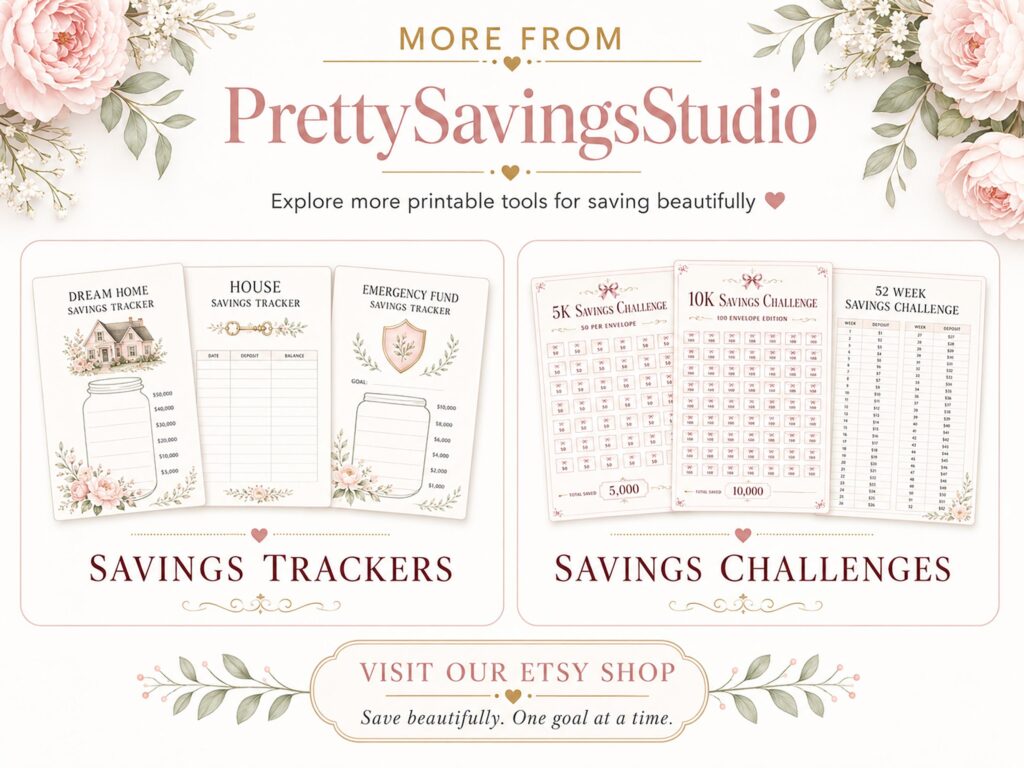
A printable savings tracker can help you see how small spending improvements contribute to a larger financial goal.
How Much Money Can You Save by Spending a Little Less?
You do not need to reduce every spending category dramatically.
Consider this example of relatively modest adjustments.
| Category | Previous Monthly Cost | New Monthly Cost | Savings |
|---|---|---|---|
| Groceries | $500 | $465 | $35 |
| Restaurants and Takeout | $180 | $140 | $40 |
| Personal Shopping | $150 | $120 | $30 |
| Transportation | $120 | $105 | $15 |
| Entertainment | $100 | $85 | $15 |
| Total | $1,050 | $915 | $135 |
By making relatively small changes across five categories, you could spend:
$135 less per month.
Over 12 months, assuming the changes are maintained:
$1,620 saved.
That money could make a meaningful contribution toward an emergency fund, vacation, or another important savings goal.
How to Spend Less Money on a Low Income
When your income is limited, you may already be careful about spending.
Instead of trying to remove essential purchases, focus on improving the value you receive from the money you must spend.
For example:
- Compare unit prices for frequently purchased essentials.
- Identify a few store-brand alternatives you genuinely like.
- Plan simple meals around affordable ingredients.
- Check whether transportation costs can be reduced through better planning.
- Compare complete prices before larger necessary purchases.
If your income does not cover essential living costs, spending adjustments alone may not solve the problem.
Your priority should be protecting necessities and looking for appropriate ways to stabilize your finances.
A Simple 30-Day Plan to Spend Less Money
If you are unsure where to begin, try focusing on one area each week.
| Week | Main Focus | What to Do |
|---|---|---|
| Week 1 | Groceries | Plan meals and compare unit prices. |
| Week 2 | Shopping | Use spending ceilings and compare alternatives. |
| Week 3 | Transportation | Combine errands and review travel costs. |
| Week 4 | Entertainment | Try lower-cost activities and review your results. |
At the end of the month, compare your spending with the previous month.
You may discover that some adjustments are effortless while others do not suit your lifestyle.
Keep the changes that genuinely work for you.
Frequently Asked Questions
What is the easiest way to spend less money?
Start with a frequently purchased category, such as groceries or takeout. Compare prices, plan purchases, and look for suitable lower-cost alternatives. Small recurring savings can accumulate over time.
How can I spend less money without stopping shopping?
Set a maximum price before purchasing, compare alternatives, consider secondhand products when appropriate, and evaluate cost per use. The goal is to pay less for things you genuinely want or need.
How can I spend less on groceries?
Plan meals before shopping, compare unit prices, choose affordable staples, and use ingredients across multiple meals. Try store-brand alternatives where the quality meets your expectations.
Is it always better to buy the cheapest product?
No. A lower purchase price does not necessarily mean better value. Consider quality, durability, cost per use, additional fees, and how frequently the item will need replacing.
How much should I try to reduce my spending?
There is no universal percentage. Start by identifying a realistic dollar amount within a few flexible categories. Even reducing spending by $50–$100 per month can create meaningful annual savings.
Spend Less Without Making Life Less Enjoyable
Learning how to spend less money is not about constantly saying no to everything.
It is about finding better ways to use the money you already have.
Plan purchases before shopping.
Compare prices and quality.
Choose affordable alternatives where they make sense.
Organize meals and transportation more efficiently.
Consider secondhand products, borrowing, renting, or repairing when practical.
And remember to look at the complete cost of a purchase—not just the advertised price.
Most importantly, give the money you save a meaningful purpose.
A printable savings tracker, savings goal tracker, or money saving challenge can help you turn small everyday savings into visible progress toward something you genuinely want.
Explore our savings trackers and money saving challenges and start turning smarter everyday spending into meaningful savings:
Pretty Savings Studio
Pretty tools for your more beautiful and organized life: