




Description
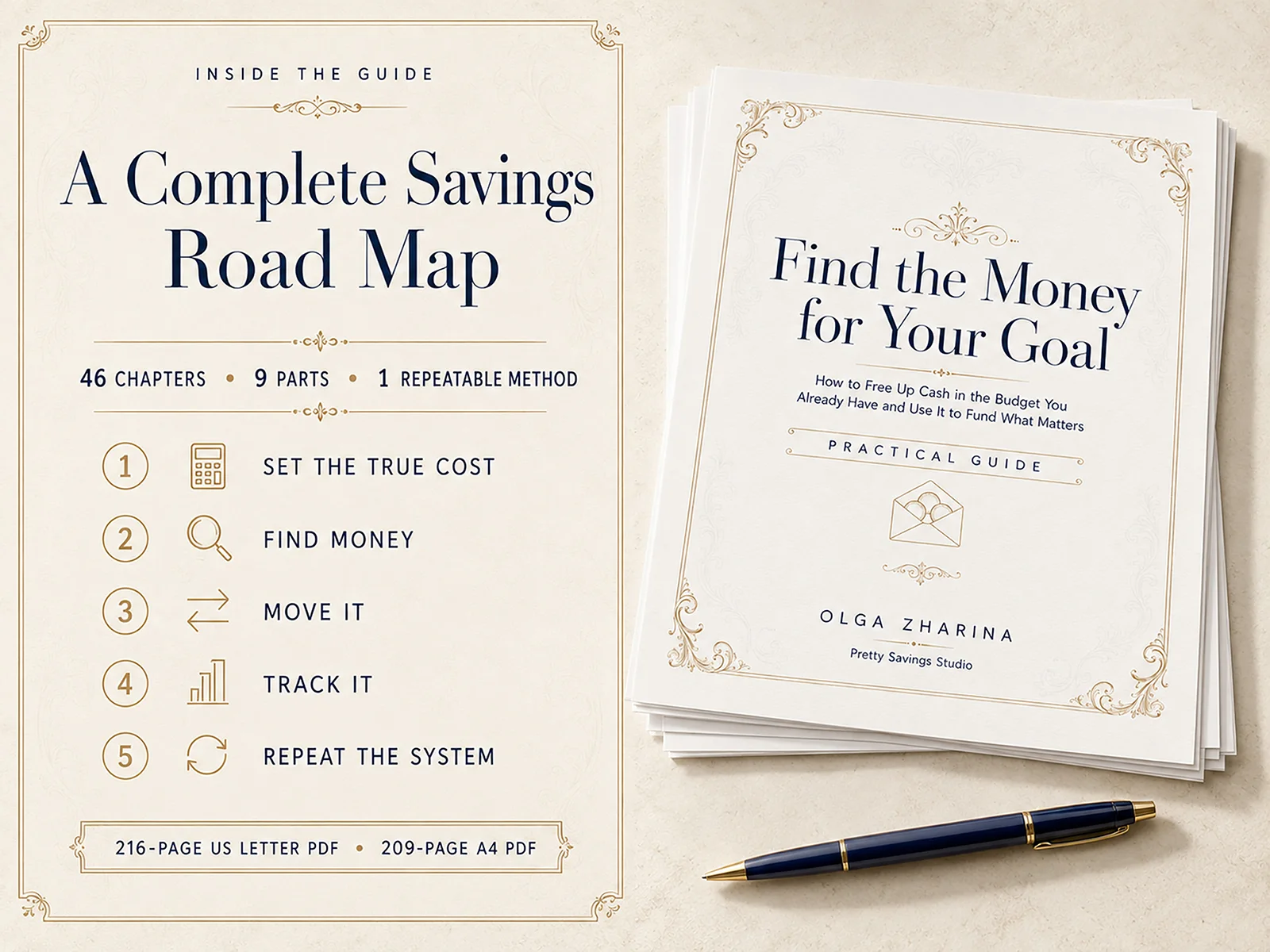
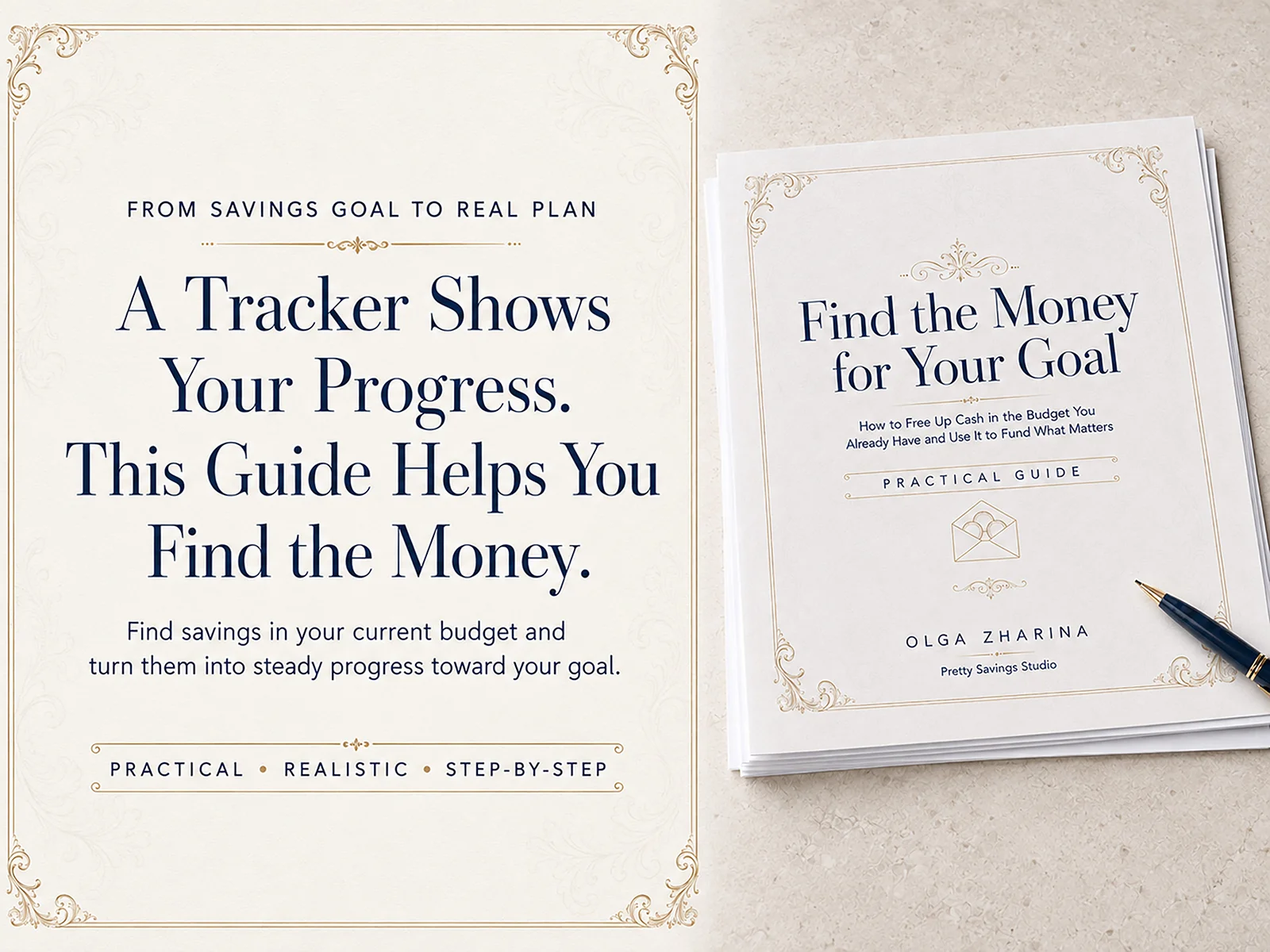
Learn how to save money, reduce everyday expenses, and turn the money you already have into progress toward something important with Find the Money for Your Goal, a practical 216-page money saving book built around real-life budgeting decisions.
Instead of waiting for a major raise, giving up everything you enjoy, or hoping that money will somehow be left at the end of the month, this book shows you how to look closely at the money already moving through your life and identify opportunities to redirect more of it toward your savings goals.
Whether you are saving for a vacation, emergency fund, home, education, laptop, family event, major purchase, or another personal goal, the method helps you create a realistic plan based on your actual income and spending.
216 PAGES • 46 ACTION-FOCUSED CHAPTERS
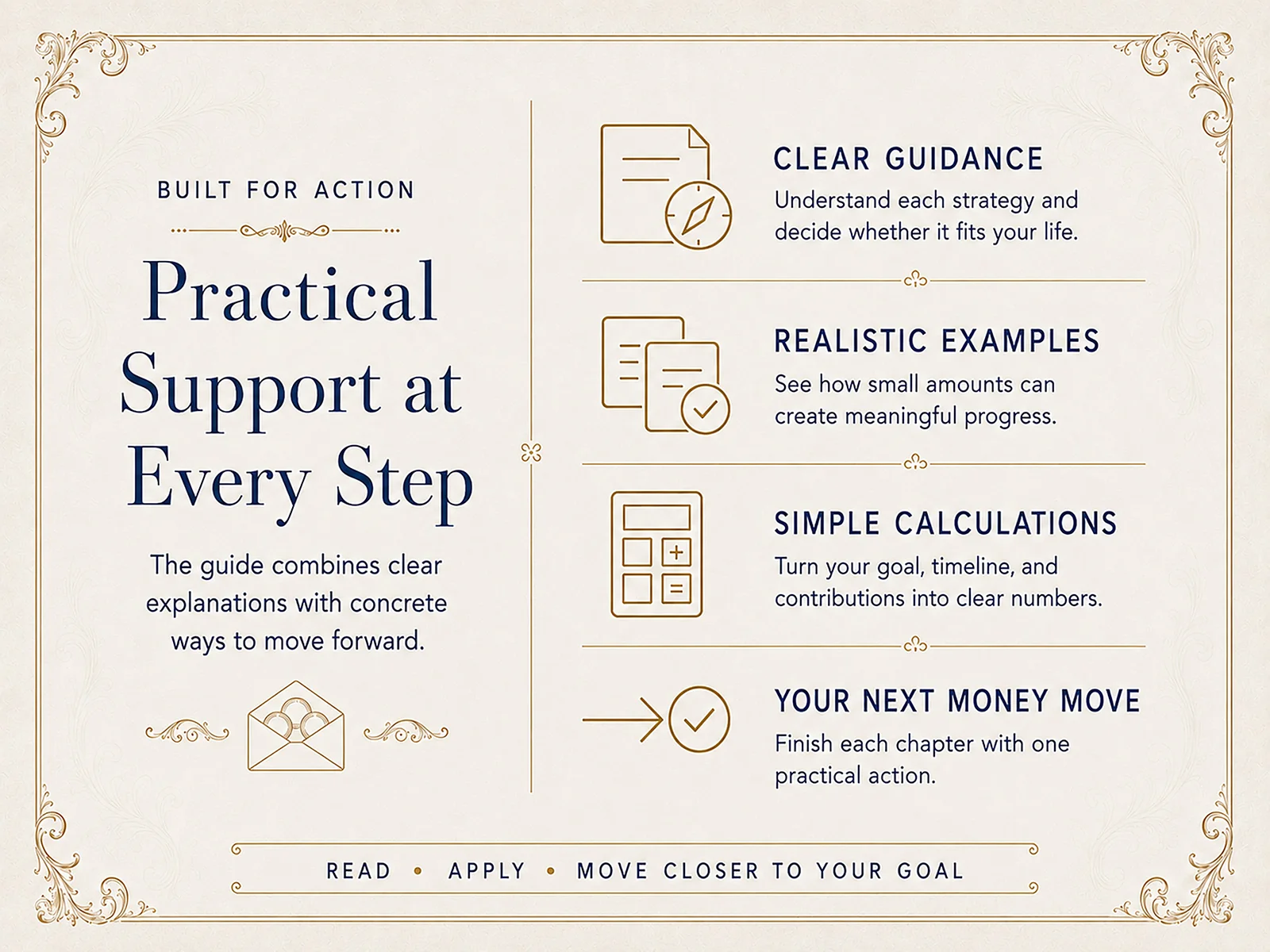
Find the Money for Your Goal is a practical money saving and budgeting book for people who want specific actions rather than vague advice.
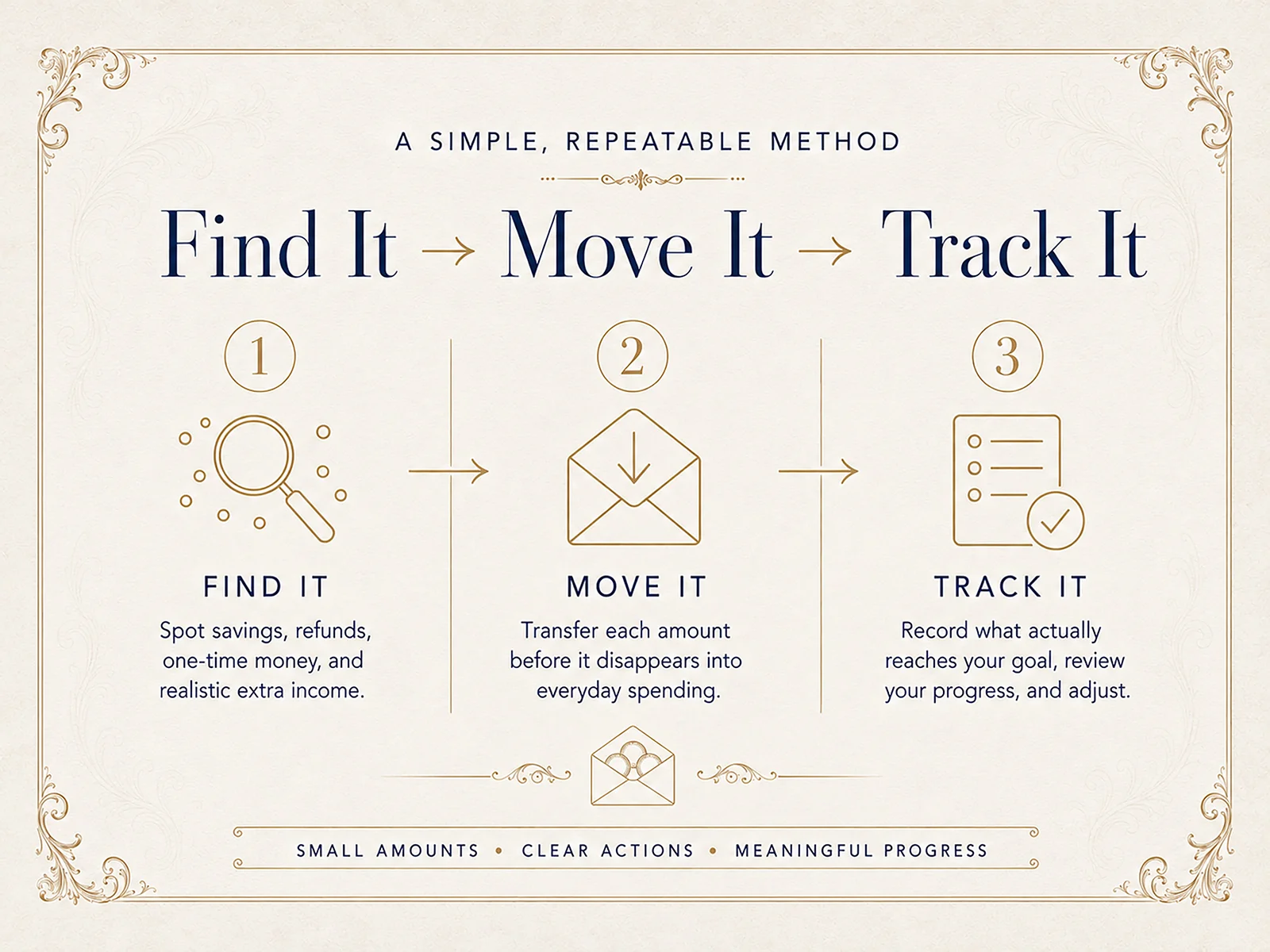
The central method is simple:
Find It → Move It → Track It
First, identify money that can realistically be freed from your current budget.
Then, move that money toward your goal before it disappears into everyday spending.
Finally, track only the money that has actually been received and transferred so that your progress stays accurate.
This process can be reused for one financial goal after another.
WHAT THIS MONEY SAVING BOOK HELPS YOU DO
You will learn how to:
• Calculate the true cost of your goal
• Determine your current Funding Gap
• Choose a realistic target date
• Calculate how much to save each month or paycheck
• Review your spending without guilt or judgment
• Identify unnecessary expenses
• Find recurring money leaks
• Cancel expenses you no longer value
• Reduce or renegotiate recurring bills
• Spend less on groceries
• Reduce everyday purchasing costs
• Recognize impulse buying patterns
• Manage emotional spending more intentionally
• Use wishlists before making purchases
• Create effective waiting periods
• Use no-spend periods without turning them into punishment
• Sell belongings you no longer need
• Direct sale proceeds toward your goal
• Use refunds, rebates, gifts, and unexpected income strategically
• Evaluate side-hustle opportunities realistically
• Automate savings contributions
• Track money that has actually reached your goal
• Avoid counting the same savings twice
• Adjust your plan during financially difficult months
• Complete a final review before making a major purchase
• Redirect successful saving habits toward your next goal
LEARN HOW TO SAVE MONEY WITH THE BUDGET YOU ALREADY HAVE
One of the biggest obstacles to saving is the feeling that there is simply no money available.
This book helps you investigate that question systematically.
Rather than immediately assuming you need a higher income, you will examine:
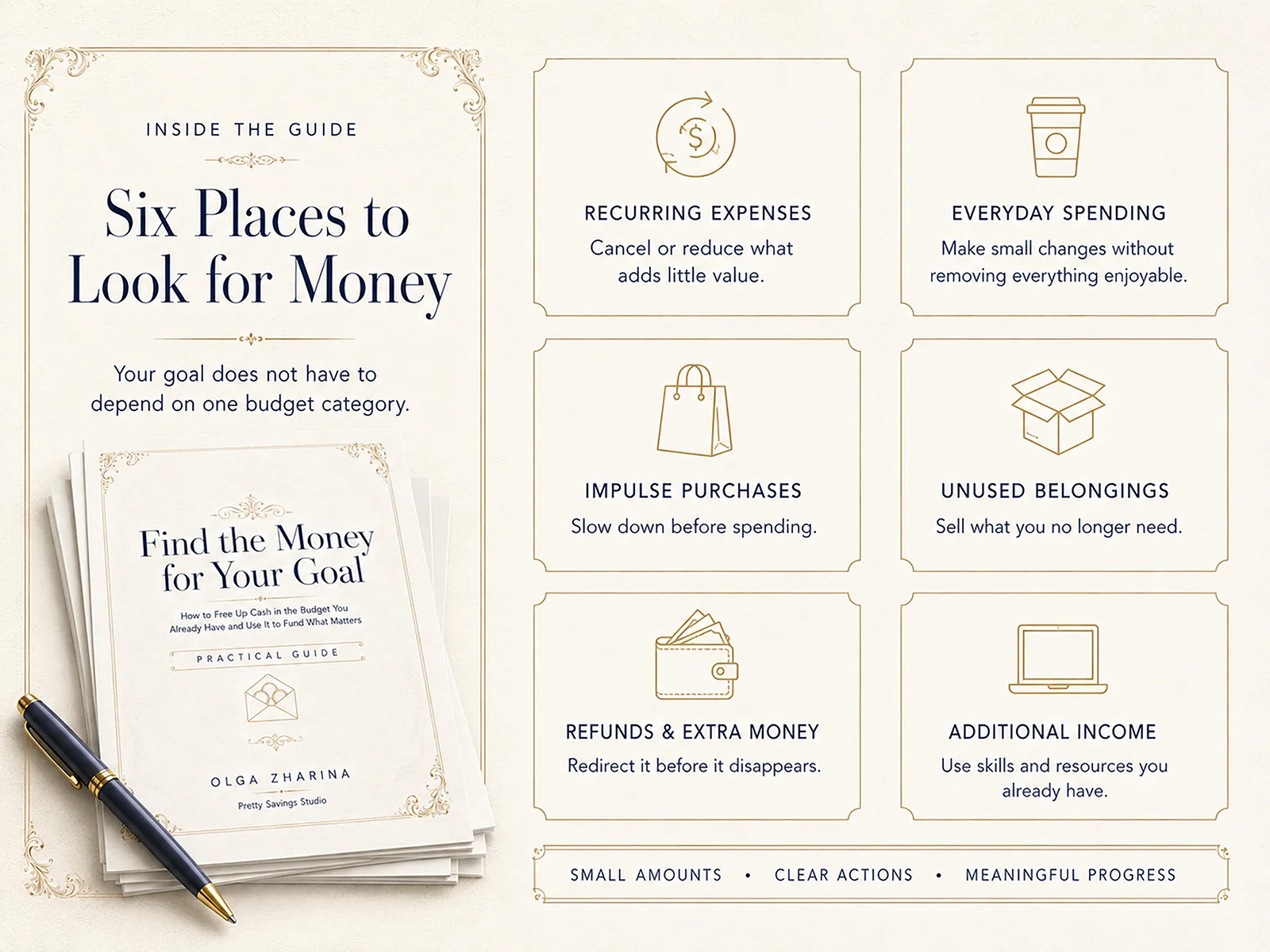
• Recurring expenses
• Everyday purchases
• Grocery spending
• Subscriptions
• Bills
• Shopping habits
• Impulse purchases
• Convenience spending
• Unused belongings
• Refunds and rebates
• Additional income
• Irregular money
• Opportunities to automate savings
The objective is not to eliminate every enjoyable expense.
It is to decide which spending still matters to you and which money could serve an important goal instead.
A PRACTICAL BUDGETING BOOK FOR BEGINNERS
You do not need advanced financial knowledge or a complicated spreadsheet to begin.
The book is designed to make budgeting and saving money easier to understand by connecting every decision with a specific goal.
Instead of asking only:
“How can I spend less?”
you begin asking:
“Would I rather spend this money here, or move it toward the goal I chose?”
That shift gives each saving decision a clear purpose.
START WITH A REAL SAVINGS GOAL
Before looking for extra money, you need to understand what you are funding.
The book helps you establish:
• The cost of your goal
• Money already dedicated to it
• Your remaining Funding Gap
• Your target date
• Your required contribution
You can then calculate how much progress you need to make:
• Per month
• Per paycheck
• Or according to another schedule that fits your finances
This makes it easier to judge whether your current savings plan is realistic.
REVIEW YOUR SPENDING WITHOUT JUDGMENT
A spending review is most useful when it produces information rather than guilt.
You will learn how to look at your recent spending and identify:
• Expenses you genuinely value
• Expenses you can reduce
• Expenses you no longer need
• Repeated small purchases
• Recurring charges
• Spending patterns
• Possible opportunities to redirect money
The purpose is not to label every purchase as good or bad.
The purpose is to find money that you would rather use for your goal.
FIND AND FIX MONEY LEAKS
Small recurring expenses can become meaningful amounts over time.
The book shows you how to examine:
• Subscriptions
• Memberships
• Service plans
• Banking or account fees
• Insurance and recurring bills
• Automatic renewals
• Digital services
• Other repeated charges
You will learn to decide whether each expense should be:
Kept → Reduced → Renegotiated → Replaced → Canceled
Any real savings can then be transferred toward your goal rather than simply disappearing back into general spending.
SAVE MONEY ON GROCERIES AND EVERYDAY PURCHASES
Everyday spending offers frequent opportunities to save, but aggressive restrictions are difficult to sustain.
Instead, the book focuses on practical ways to make repeated purchases more intentional.
You will explore strategies for:
• Grocery planning
• Comparing prices
• Reducing waste
• Avoiding unnecessary convenience costs
• Planning routine purchases
• Recognizing repeated overspending
• Separating needs from automatic habits
Even modest savings can become significant when they occur repeatedly and are consistently transferred toward a goal.
REDUCE IMPULSE BUYING
Impulse purchases can quietly compete with long-term savings goals.
The book helps you create simple systems such as:
• Shopping wishlists
• Waiting periods
• Planned shopping decisions
• Purchase questions
• Spending boundaries
• Final purchase reviews
The goal is not to stop buying things you enjoy.
It is to create enough space between wanting and buying to decide which purchase matters more.
USE NO-SPEND PERIODS EFFECTIVELY
No-spend periods can be useful when they have a clear purpose and realistic boundaries.
You will learn how to decide:
• What counts as a no-spend purchase
• Which expenses remain necessary
• How long the period should last
• What you are trying to learn from it
• Where the money not spent should go
A successful no-spend period should create measurable progress rather than simply postpone purchases.
TURN UNUSED BELONGINGS INTO GOAL MONEY
Things you no longer use may represent money that could be redirected toward something you value more.
The book covers a practical process for:
• Identifying items worth selling
• Deciding whether selling is worth your time
• Pricing realistically
• Tracking actual proceeds
• Moving received money toward your goal
Only money that is actually received and transferred counts toward progress.
USE EXTRA AND UNEXPECTED MONEY INTENTIONALLY
Savings goals can move faster when irregular income has a plan before it arrives.
You will learn how to think about:
• Refunds
• Rebates
• Gifts
• Bonuses
• Cash-back rewards
• Sale proceeds
• Unexpected income
• Other financial windfalls
Instead of letting extra money automatically blend into everyday spending, you can decide in advance what portion should support your goal.
EVALUATE SIDE HUSTLES REALISTICALLY
Extra income can help, but not every income opportunity is worth pursuing.
The book helps you consider factors such as:
• Time required
• Startup expenses
• Ongoing costs
• Realistic earnings
• Taxes or fees
• Energy required
• How quickly you will actually receive the money
The focus is on net money available for your goal, not impressive-looking revenue numbers.
MOVE THE MONEY BEFORE IT DISAPPEARS
Finding a way to save 20, 50, or 100 does not automatically mean that amount will reach your goal.
A central principle of the book is that identified savings should be deliberately moved.
You will learn how to create practical transfer rules for:
• Regular contributions
• Reduced expenses
• Canceled subscriptions
• Extra income
• Sale proceeds
• Refunds and rebates
• Other money you intentionally free
The transfer is what converts a good intention into measurable progress.
AUTOMATE YOUR SAVINGS WHEN POSSIBLE
Automation can reduce the number of decisions required each month.
Depending on your situation, you may use:
• Scheduled transfers
• Paycheck-based transfers
• Monthly contributions
• Separate savings accounts
• Goal-specific savings systems
The book helps you choose an approach that works with your actual cash flow rather than forcing an unrealistic schedule.
TRACK REAL SAVINGS PROGRESS
One of the easiest financial mistakes is counting savings that never actually reached the goal.
For example, spending 30 less on groceries does not automatically mean your savings account increased by 30.
Find the Money for Your Goal emphasizes tracking money that has actually been:
Saved → Received → Transferred → Added to the goal
This helps keep your progress accurate.
MAKE SAVINGS TRACKERS AND CHALLENGES MORE USEFUL
Savings trackers and money saving challenges can be motivating visual tools, but the tracker itself does not create the money.
This book teaches the method behind the tracker:
• Where the contribution can come from
• How to free money from existing spending
• When to transfer it
• How to verify the transfer
• How to adapt when the planned amount is unavailable
You can therefore use the book alongside printable savings challenges, budget binders, sinking funds, or savings goal trackers.
WHAT TO DO DURING DIFFICULT MONTHS
Not every month will follow the original plan.
Unexpected bills, income changes, family expenses, or other financial pressures can temporarily reduce the amount available for savings.
The book helps you think through options such as:
• Reducing the contribution temporarily
• Extending the timeline
• Pausing without abandoning the goal
• Using milestones differently
• Recalculating the funding plan
• Restarting after a difficult period
A flexible plan is more useful than one that works only during perfect months.
BEFORE YOU SPEND THE MONEY
Reaching the financial target does not automatically mean you should immediately make the planned purchase.
The book includes a final review to help you reconsider:
• Current price
• Remaining costs
• Your financial situation
• Whether the goal still matters
• Whether the purchase still fits your priorities
• Whether circumstances have changed
A goal is allowed to change.
Saving the money gives you options — it does not remove your ability to make a new decision.
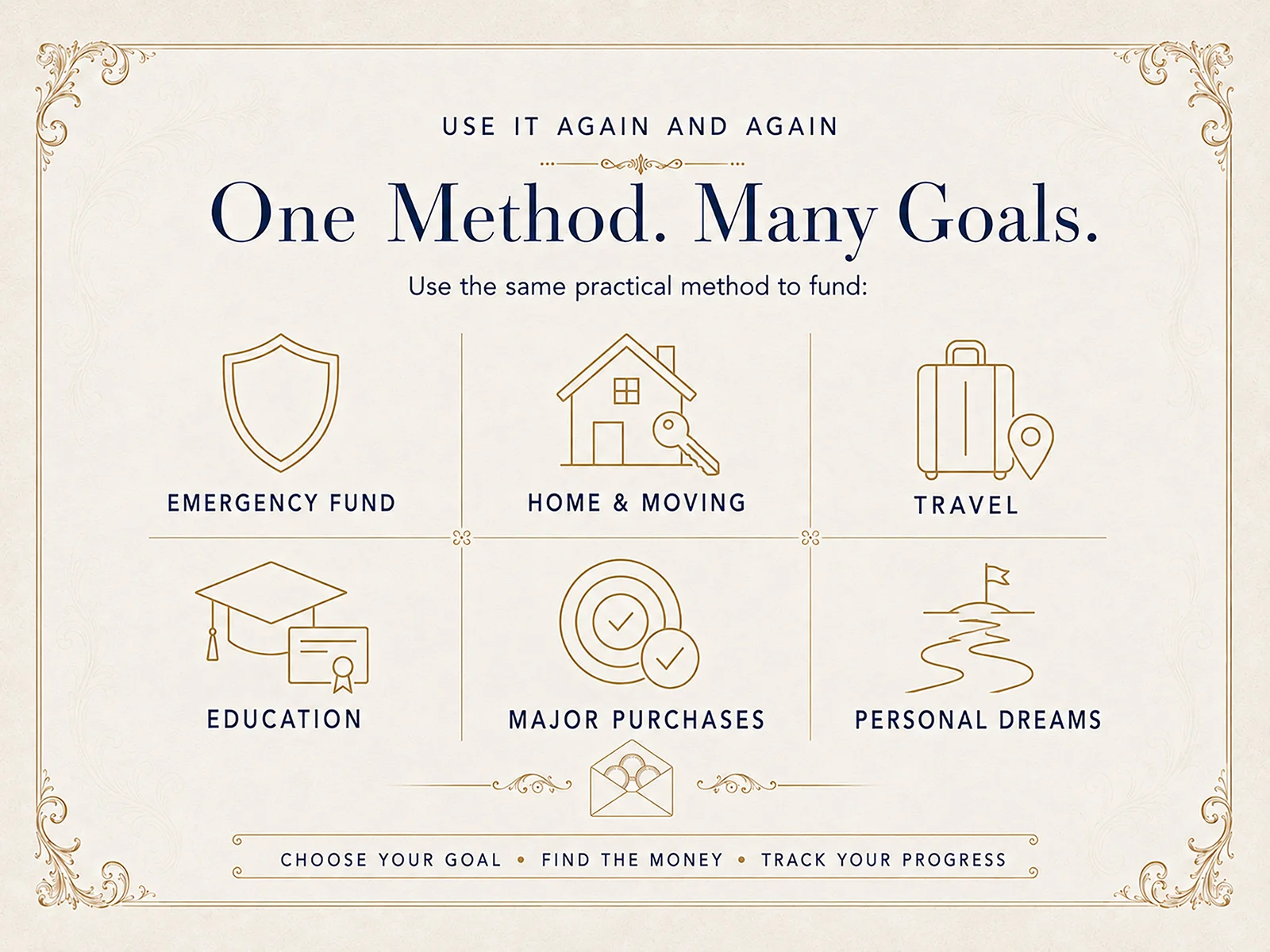
USE THE METHOD FOR YOUR NEXT GOAL
The skills you develop do not disappear when one goal is complete.
You can reuse the same process for:
• Vacation savings
• Emergency funds
• A new home
• Moving expenses
• Education
• Electronics
• Family events
• Major purchases
• Home improvements
• Personal projects
• Other financial goals
Once you understand how to find money, move it, and track it, the same system can support your next savings goal.
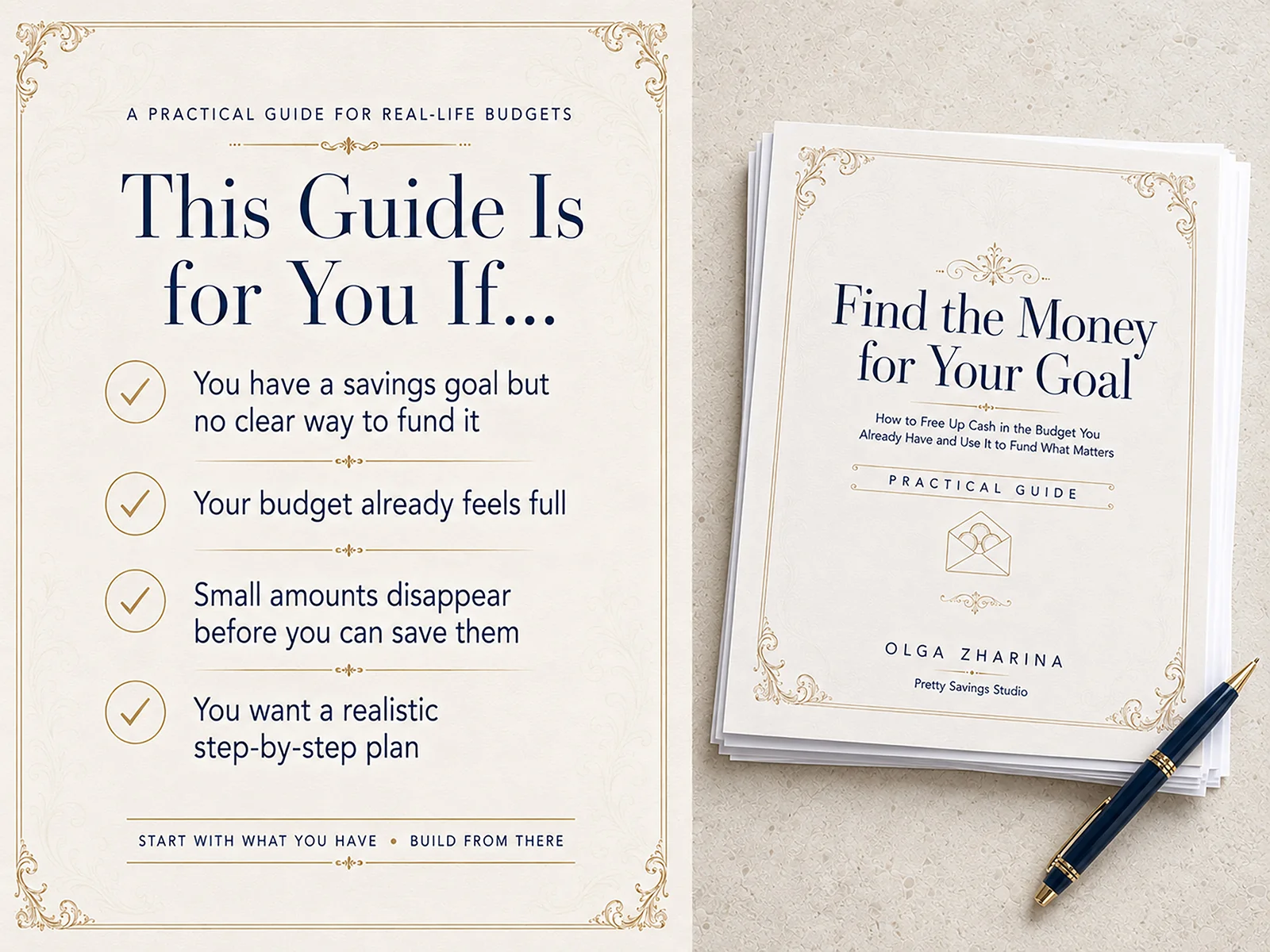
WHO THIS BOOK IS FOR
Find the Money for Your Goal may be especially useful if you:
• Are new to budgeting or personal finance
• Want to save money but feel there is nothing left in your budget
• Have a specific financial goal but do not know where to start
• Want to cut expenses without eliminating everything enjoyable
• Struggle to turn good intentions into actual savings transfers
• Want a realistic system for reaching savings goals
• Use savings trackers or money saving challenges
• Want to understand where savings contributions can actually come from
• Prefer practical money-saving strategies that can be adapted to your own circumstances
You do not need a perfect budget or a high income to begin.
The purpose is to work more intentionally with the money already moving through your life.
WHAT YOU WILL RECEIVE
You will receive the complete Find the Money for Your Goal digital book:
• 216 pages
• 46 detailed chapters, plus Introduction and Conclusion
• US Letter — 8.5 × 11 in
• English-language edition
• Digital PDF format
• Suitable for reading on a screen or printing at home
You can print the complete book or only the pages you want to reference.
For best printing results, select US Letter paper and choose Actual Size or 100% Scale in your printer settings.
PLEASE NOTE
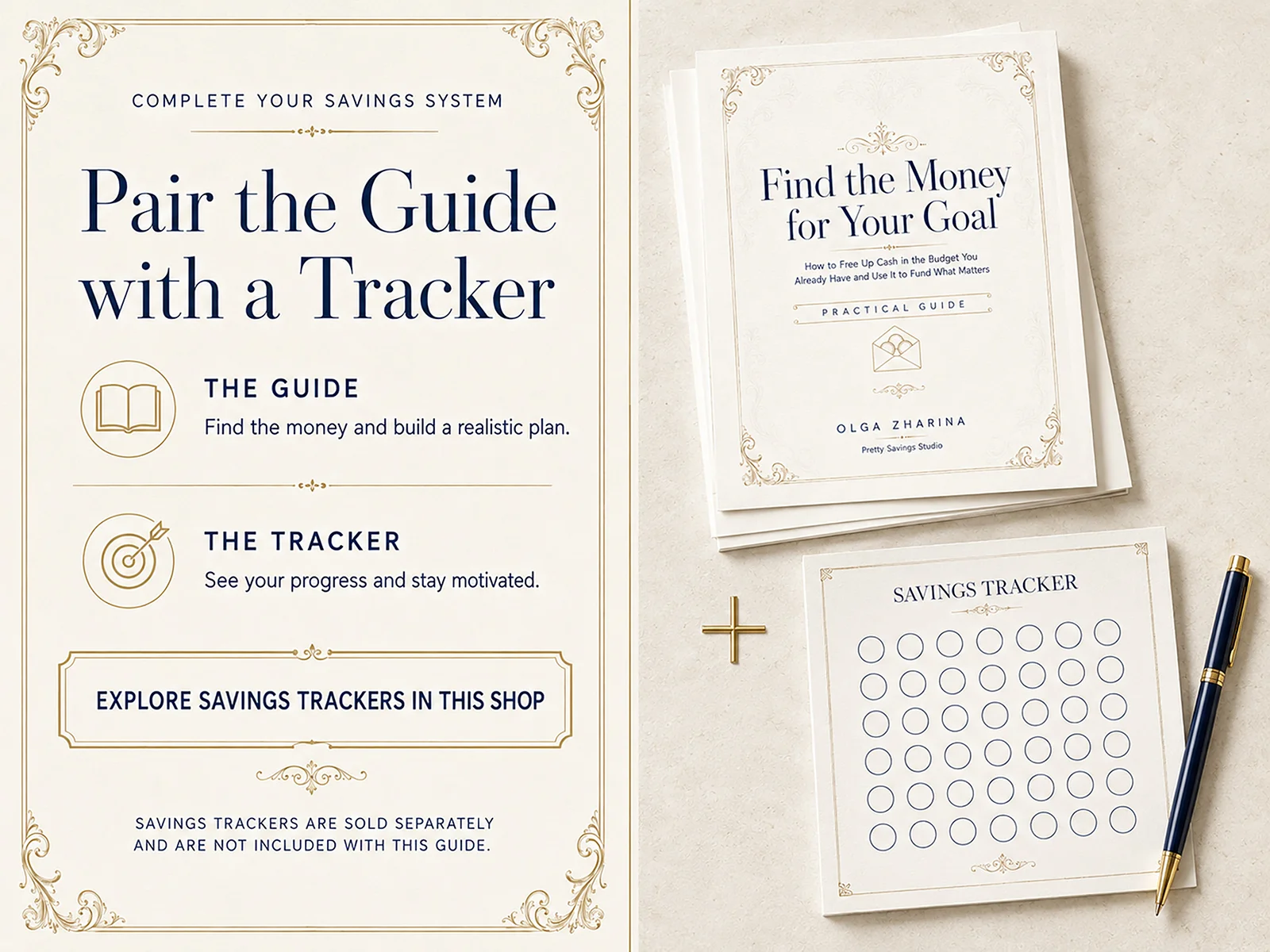
This product includes the digital book only.
It does not include:
• A workbook
• Budget planner
• Savings tracker
• Editable template
• Physical book
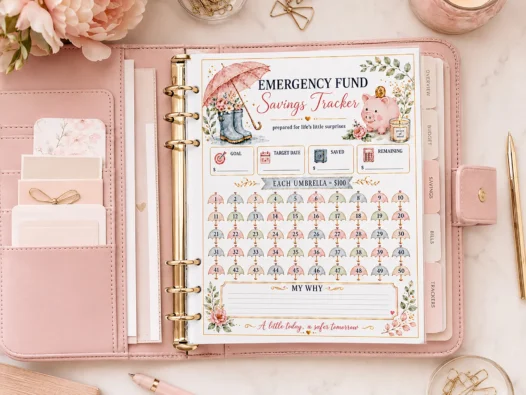
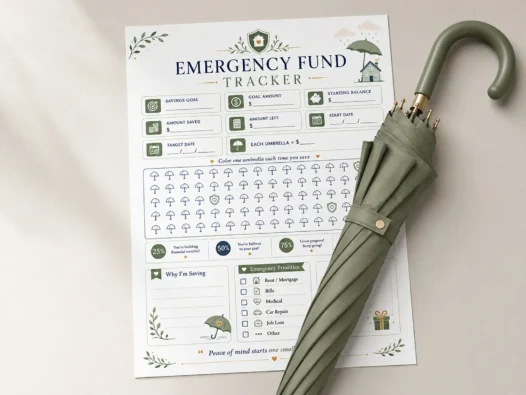
• Accessories shown in product photographs
Any additional items visible in listing images are for presentation purposes only.
DIGITAL DOWNLOAD
This is a digital product. No physical item will be shipped.
The book is supplied as a PDF and can be read on a compatible computer, tablet, or other device, or printed for personal use.
Printed colors may vary slightly depending on your screen, printer, ink, paper, and print settings.
FINANCIAL DISCLAIMER
This book is provided for general educational and informational purposes only.
It does not constitute individualized financial, legal, investment, credit, accounting, or tax advice.
PERSONAL USE
This digital book is for personal use only.
You may print copies for yourself as needed, but the file or its contents may not be resold, shared, reproduced, redistributed, uploaded for others, or used commercially.
Choose your goal. Find the money that can be redirected within your current financial life. Move it before it disappears. Track the progress you actually make.
Then use the same method again for whatever matters next.


Reviews
There are no reviews yet.