Description
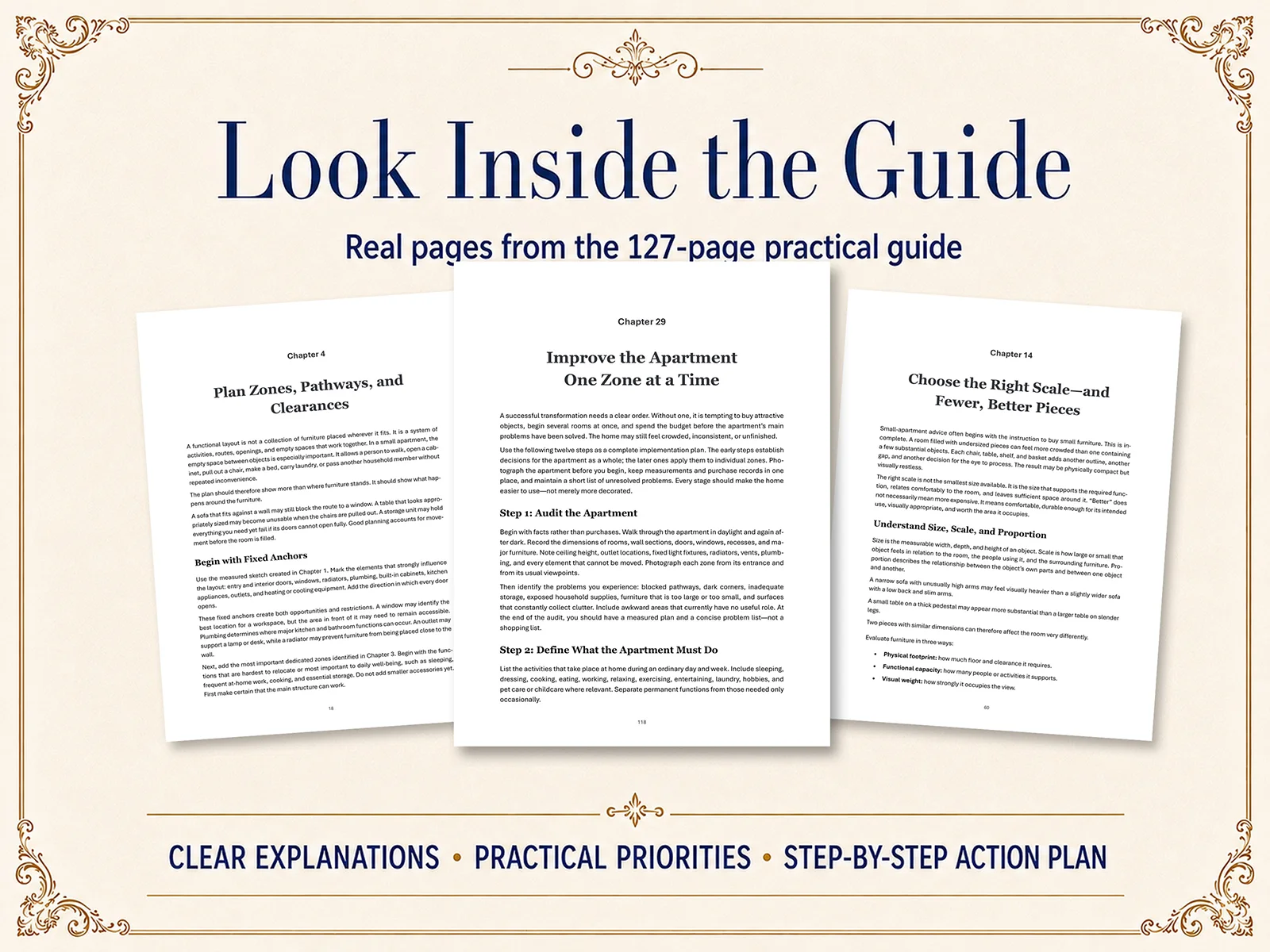
Create a small apartment that feels more spacious, organized, comfortable, and refined with How to Make a Small Apartment Feel Luxurious, a comprehensive small apartment interior design book focused on practical improvements for real homes.
This 127-page digital book shows you how to make better use of limited square footage through smarter layouts, thoughtful furniture choices, effective storage, flattering lighting, cohesive color, and everyday organization.
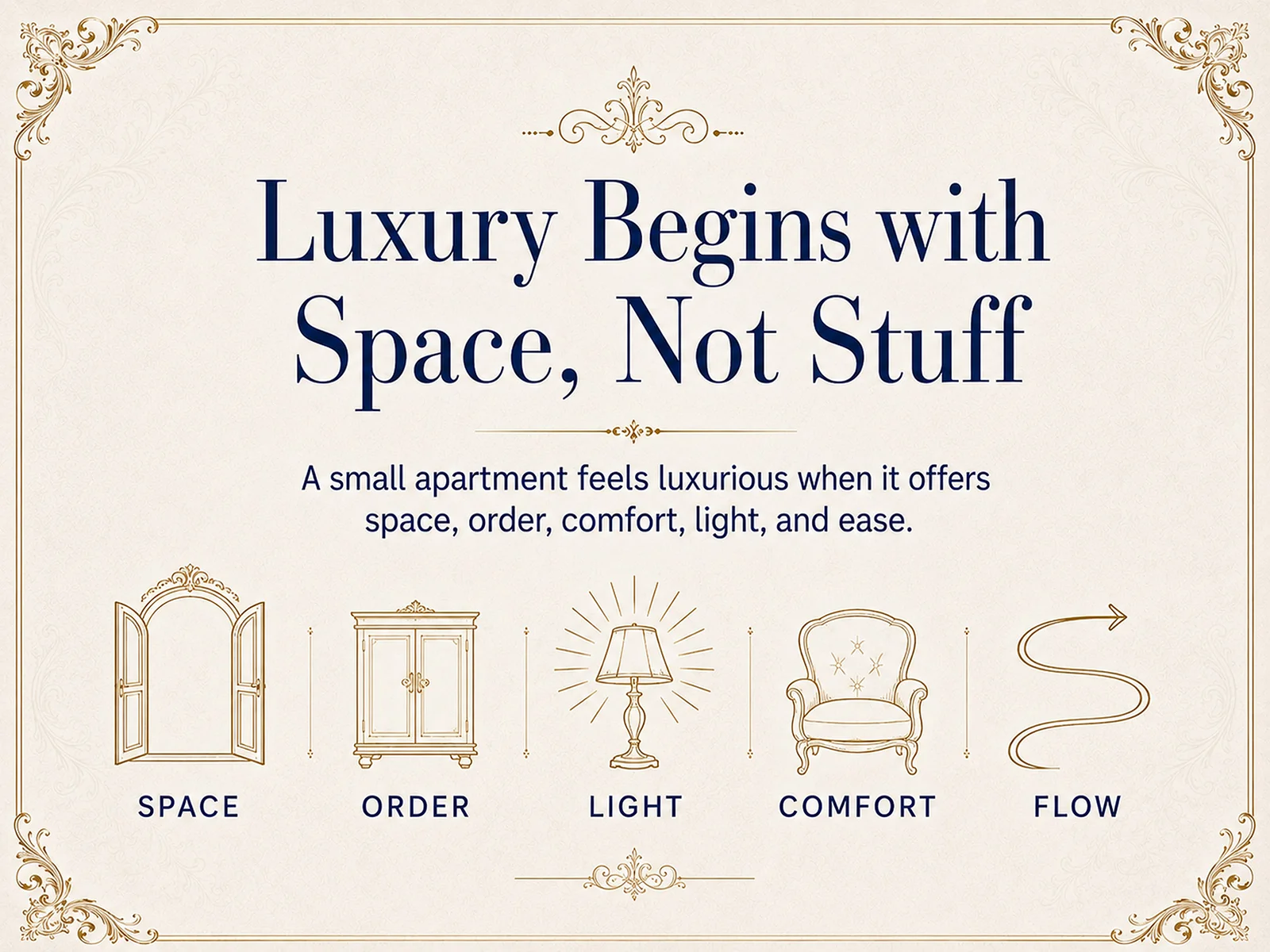
The goal is not to fill your apartment with expensive décor. A luxurious-feeling small home comes from space to move, visual calm, well-planned storage, comfortable proportions, good lighting, and details that make daily life feel easier.
Whether you live in a studio, rental apartment, first home, or compact city space, this book gives you a structured way to improve what you already have.
127 PAGES • 30 PRACTICAL CHAPTERS • 5 PARTS
How to Make a Small Apartment Feel Luxurious is not a coffee-table book filled only with beautiful interiors.
It is a practical small-space interior design book created to help you make better decisions about:
• Layout
• Furniture
• Storage
• Lighting
• Color
• Organization
• Comfort
• Apartment decorating
• Space-saving solutions
• Everyday functionality
You can apply the principles gradually, without a complete renovation or a large decorating budget.
WHAT THIS SMALL APARTMENT INTERIOR DESIGN BOOK HELPS YOU DO
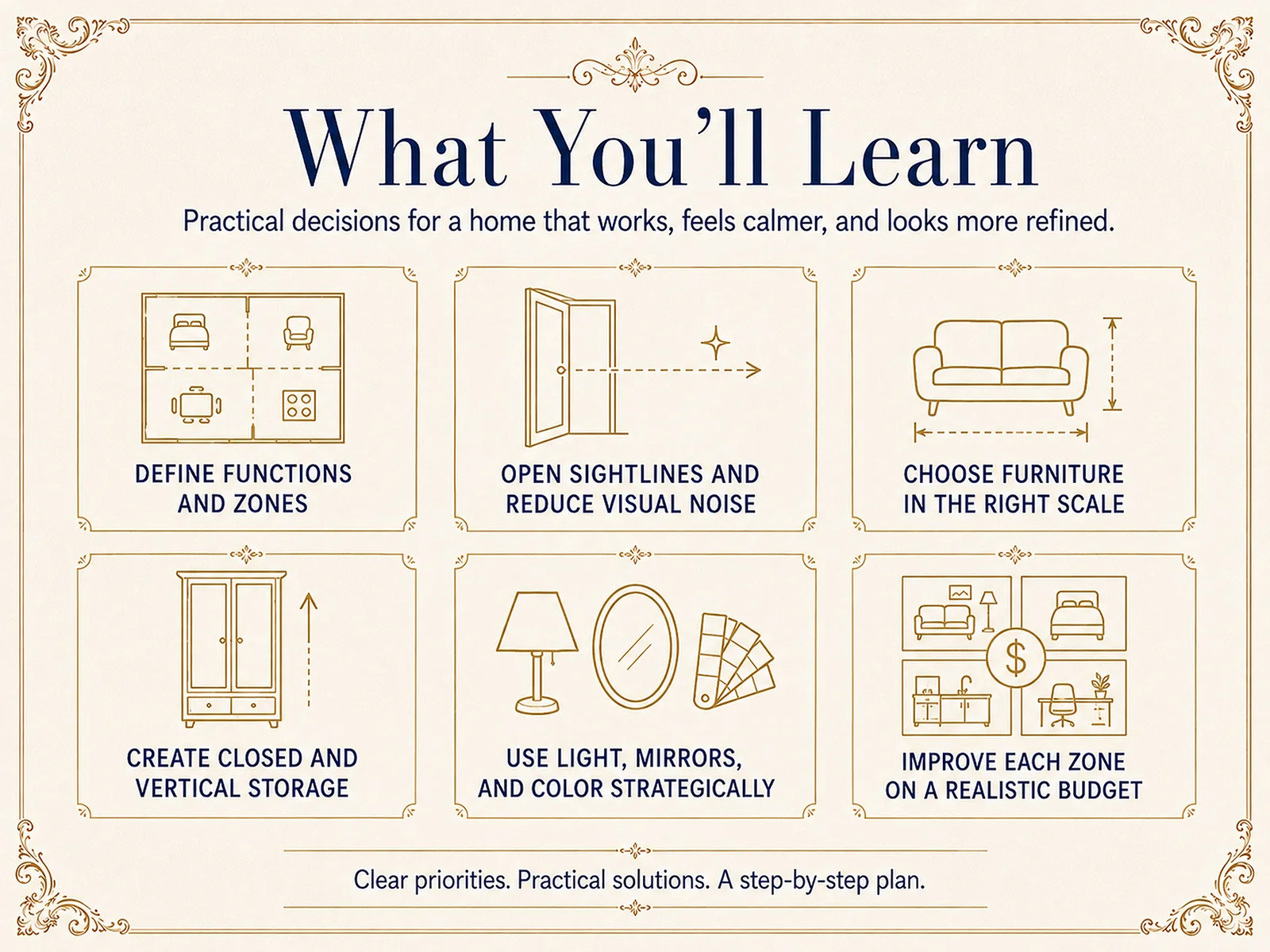
You will learn how to:
• Identify the essential functions your apartment needs to support
• Create practical zones without building walls
• Improve furniture placement and circulation
• Make narrow pathways feel more comfortable
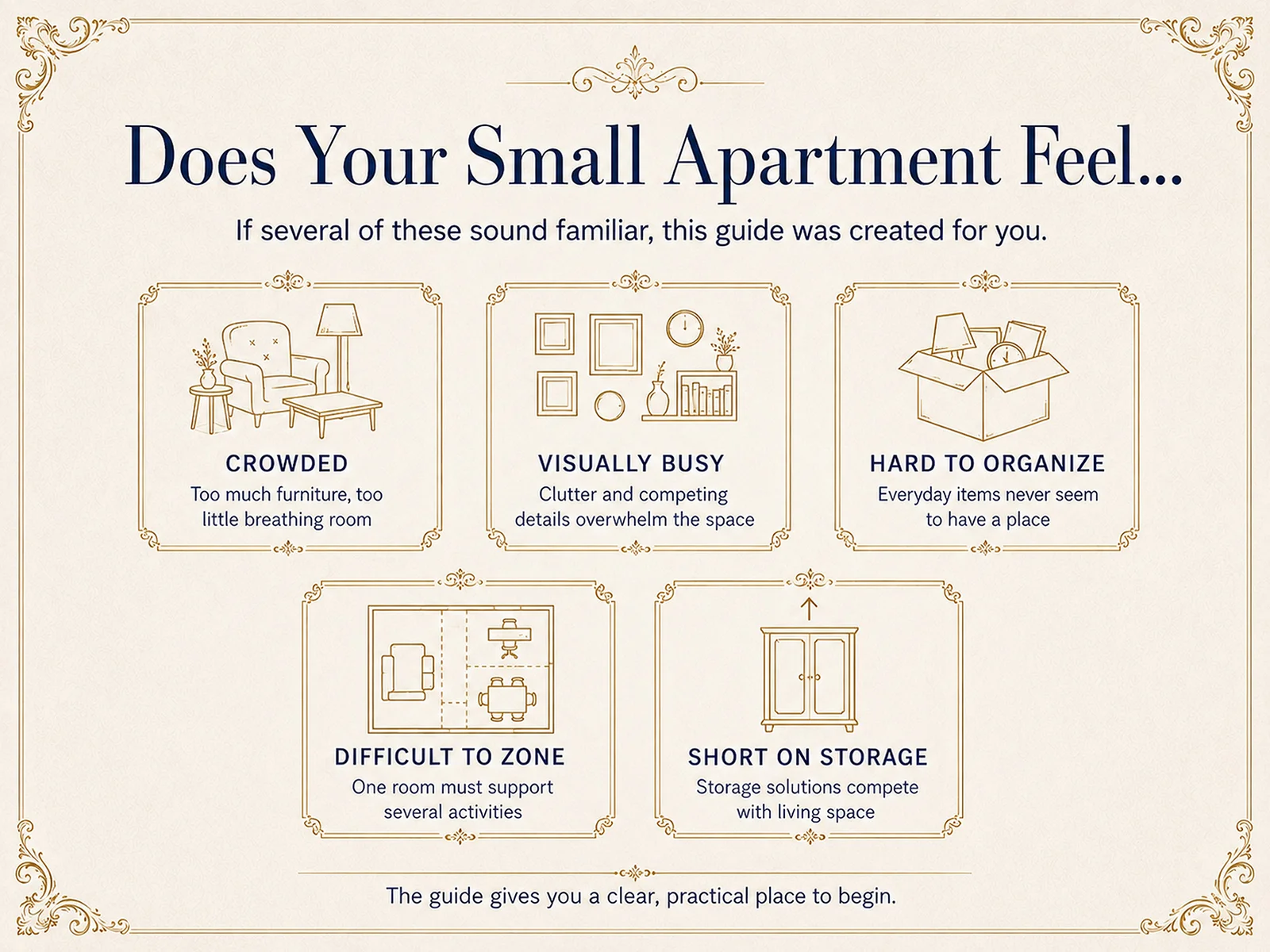
• Reduce clutter and visual noise
• Open sightlines through the apartment
• Create more breathing room
• Choose furniture in the right scale
• Understand visual weight and proportion
• Select multifunctional furniture carefully
• Create closed and discreet storage
• Make better use of vertical space
• Use overlooked areas more effectively
• Keep countertops and visible surfaces clearer
• Build a cohesive color palette
• Connect different zones visually
• Layer lighting for a softer, more spacious effect
• Use mirrors and reflective surfaces strategically
• Add hotel-inspired comfort
• Improve a rental without permanent changes
• Decide where your decorating budget will have the most impact
• Transform the apartment one area at a time
• Maintain a calmer home through simple routines
PART ONE — MAKE THE APARTMENT WORK BEFORE YOU DECORATE
A beautiful apartment first needs to function well.
The first part of the book helps you evaluate how your space is actually being used before you begin buying furniture or decorative pieces.
You will learn how to:
• Define the functions your home must perform
• Decide which activities deserve permanent space
• Plan zones within an open room
• Improve pathways and clearances
• Evaluate what is taking up unnecessary space
• Create a whole-apartment design direction
This foundation helps prevent decorating decisions that make a small apartment feel more crowded.
PART TWO — MAKE A SMALL APARTMENT FEEL BIGGER AND CALMER
Limited square footage does not automatically have to feel cramped.
This section focuses on visual strategies that can make a small apartment feel more open and cohesive.
Topics include:
• Reducing visual clutter
• Opening sightlines
• Creating breathing room
• Zoning without walls
• Creating privacy without closing the space
• Choosing a cohesive color palette
• Connecting rooms and zones visually
• Improving natural and artificial lighting
• Positioning mirrors effectively
The result is a home that feels calmer rather than visually busy.
PART THREE — CHOOSE FURNITURE AND STORAGE THAT EARN THEIR PLACE
Furniture has an especially strong effect in a small home.
This section helps you evaluate not only whether a piece fits physically, but whether it deserves the space it occupies.
You will explore:
• Furniture scale
• Proportion
• Visual weight
• Fewer-but-better furniture choices
• Multifunctional furniture
• Closed storage
• Integrated storage solutions
• Vertical storage
• Forgotten spaces
• Clear countertops and surfaces
• Comfortable, hotel-inspired details
The focus is on creating a home that feels useful without looking overfilled.
PART FOUR — APPLY THE METHOD ROOM BY ROOM
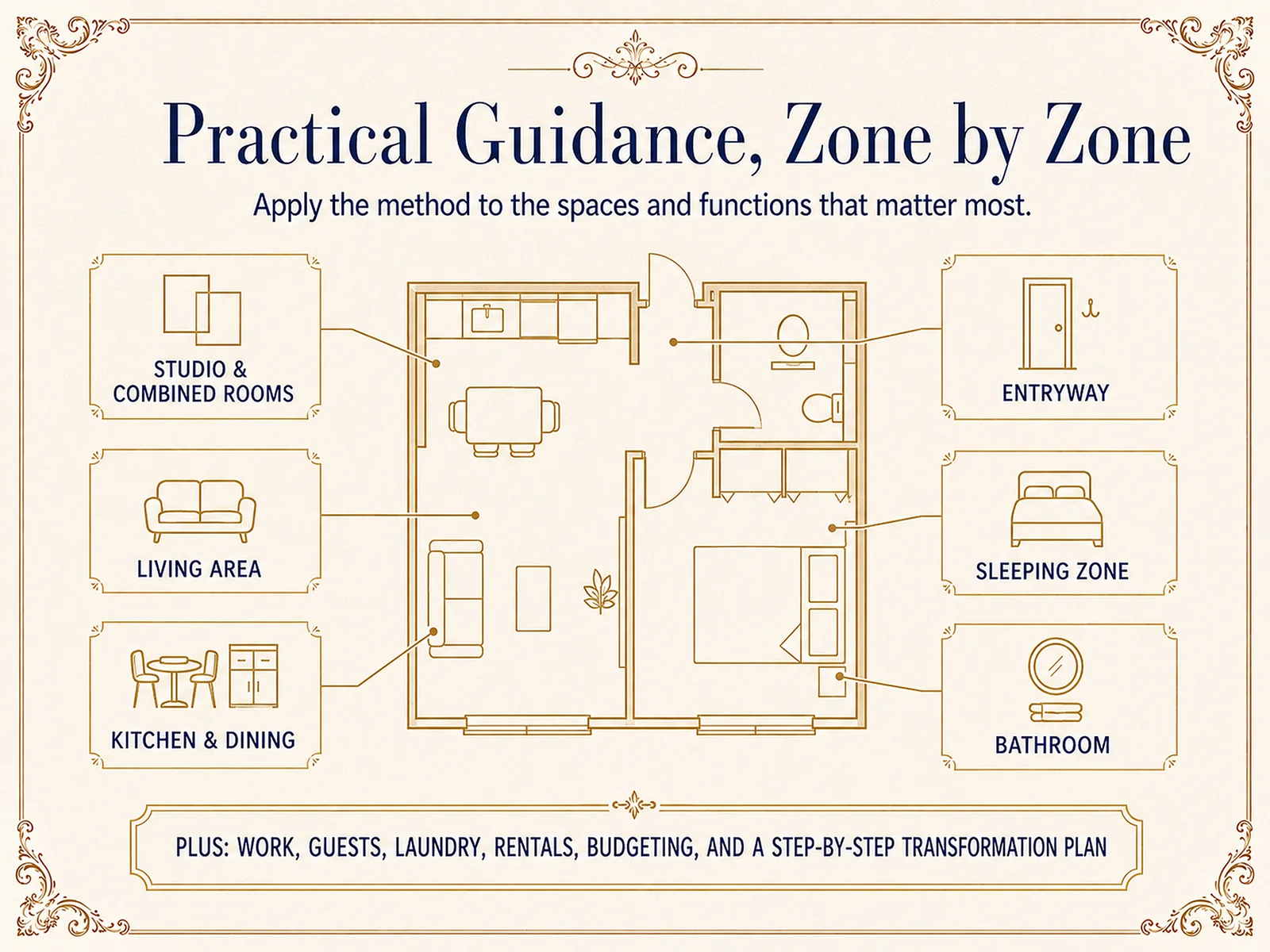
The principles are then applied to specific areas of a small apartment.
The book covers:
• Studio apartments
• Combined living and sleeping spaces
• Entryways
• Living rooms
• Kitchens
• Dining areas
• Bedrooms
• Sleeping zones
• Bathrooms
• Home offices
• Guest areas
• Laundry spaces
• Hobby spaces
• Other occasional-use zones
This makes it easier to move from general decorating ideas to practical changes in your own apartment.
PART FIVE — CREATE A REALISTIC TRANSFORMATION PLAN
You do not need to change everything at once.
The final section helps you prioritize improvements and create a realistic plan based on your budget, living situation, and current apartment.
You will learn how to:
• Make renter-friendly upgrades
• Choose reversible improvements
• Identify high-impact changes
• Set a realistic apartment improvement budget
• Prioritize one zone at a time
• Create a complete transformation sequence
• Maintain the finished result
• Prevent clutter and visual noise from returning
HOW TO MAKE A SMALL APARTMENT LOOK MORE EXPENSIVE
A more luxurious-looking apartment is not necessarily one filled with expensive items.
The book focuses on qualities that often make interiors feel more polished:
• Better proportions
• Clearer surfaces
• Cohesive colors
• Thoughtful lighting
• Well-scaled furniture
• Less visible clutter
• Better storage
• Comfortable textiles
• Consistency between rooms
• Carefully chosen details
These principles can help a small apartment look more intentional without relying on constant shopping or trend-driven decorating.
SMALL APARTMENT STORAGE AND ORGANIZATION
Storage is one of the most important parts of small-space design.
Instead of simply adding more containers, the book helps you think about where belongings should live and how much visible storage your apartment can comfortably handle.
You will explore ways to:
• Reduce exposed clutter
• Use closed storage more effectively
• Improve vertical storage
• Use awkward or forgotten areas
• Keep daily-use items accessible
• Protect visual calm
• Make small rooms easier to maintain
The aim is not perfect minimalism. It is a home where everyday belongings have logical places.
LIGHTING FOR SMALL APARTMENTS
Good lighting can completely change the way a small home feels.
The book explains how to move beyond relying on one central ceiling light and instead create layers of illumination.
You will learn how lighting can help:
• Make rooms feel warmer
• Reduce harsh shadows
• Improve evening comfort
• Highlight attractive areas
• Add visual depth
• Make a space feel more finished
• Support different activities throughout the day
SMALL APARTMENT FURNITURE PLANNING
In a compact home, oversized or poorly positioned furniture can affect the entire apartment.
The book shows you how to think about:
• Furniture dimensions
• Clearance around furniture
• Movement through the space
• Visual weight
• Leggy versus solid furniture
• Multifunctional pieces
• Furniture that performs more than one job
• When smaller furniture is useful — and when it is not
The goal is not to make every piece tiny. It is to choose furniture that works with the proportions of the apartment.
IDEAS FOR RENTERS
Many apartment residents cannot make permanent changes.
This book includes ideas for improving a rental while keeping major structural elements intact.
You can focus on changes such as:
• Furniture placement
• Lighting
• Textiles
• Storage
• Removable solutions
• Mirrors
• Accessories
• Color coordination
• Surface organization
• Comfortable everyday details
This makes the method useful whether you own your apartment or rent it.
WHO THIS BOOK IS FOR
This book may be especially useful for:
• People living in small apartments
• Studio apartment residents
• Renters
• First-time apartment owners
• People dealing with limited storage
• Anyone struggling with awkward layouts
• People who want a calmer home
• Anyone interested in small-space decorating
• People who want a more expensive-looking apartment without excessive spending
• Anyone creating a more functional home gradually
The method is not tied to one interior design style.
You can apply the principles to modern, traditional, minimalist, contemporary, vintage, romantic, eclectic, or other interiors.
A PRACTICAL SMALL SPACE DESIGN BOOK
This book does not tell you to copy one specific apartment.
Instead, it helps you understand why some small spaces feel calm and comfortable while others feel crowded or unfinished.
The principles can then be adapted to your own:
• Apartment size
• Layout
• Budget
• Lifestyle
• Storage needs
• Decorating style
• Rental restrictions
• Existing furniture
This makes it a practical resource for solving your own small-space problems rather than reproducing someone else’s home.
WHAT YOU WILL RECEIVE
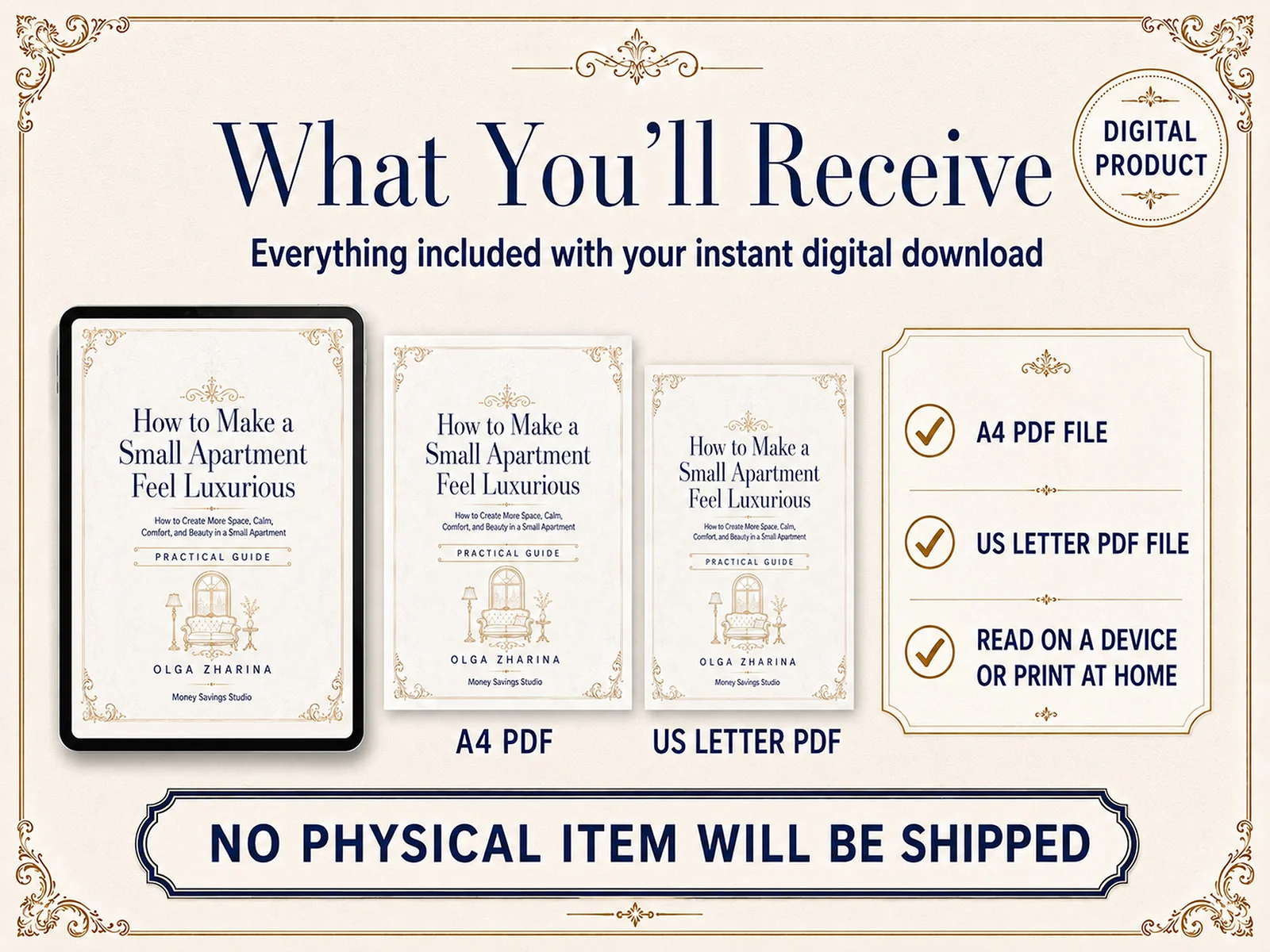
You will receive How to Make a Small Apartment Feel Luxurious as a digital book in two printable PDF formats:
• US Letter — 8.5 × 11 in — 127 pages
• A4 — 210 × 297 mm — 120 pages
The files are written in English and can be read digitally or printed.
PRINTING
If you choose to print the book, select the file that matches your paper size and use Actual Size or 100% Scale in your printer settings.
You can print at home or through a professional printing service.
DIGITAL DOWNLOAD
This is a digital product.
No physical book or printed item will be shipped.
Printed colors may vary slightly depending on your monitor, printer, ink, paper, and print settings.
PERSONAL USE
This digital book is for personal use only.
The files and their contents may not be resold, shared, reproduced, redistributed, uploaded for others, or used commercially.
A small apartment does not need more things to feel luxurious.
It needs better use of space, less visual noise, comfortable movement, thoughtful storage, flattering light, and details that work together beautifully.


Reviews
There are no reviews yet.